
I have been a professional copywriter for over a decade. Naturally, when AI video tools started claiming they could "write viral scripts in seconds," I took it personally.
My ego said, “There is no way a specialized algorithm understands human emotion better than I do.” My bank account said, “If this works, I can save 10 hours a week.”
So, I decided to settle the debate the only way that matters: with data. I ran a live A/B test using Story Video AI to generate the visuals, but I split the scripting process.
This wasn't a theoretical exercise. I put actual ad budget behind these videos on social media to see which one real humans would actually watch, click, and convert. Here is exactly what I did, and the uncomfortable truth I discovered.
The Experiment Setup
To keep the test fair, I needed to control every variable except the script.
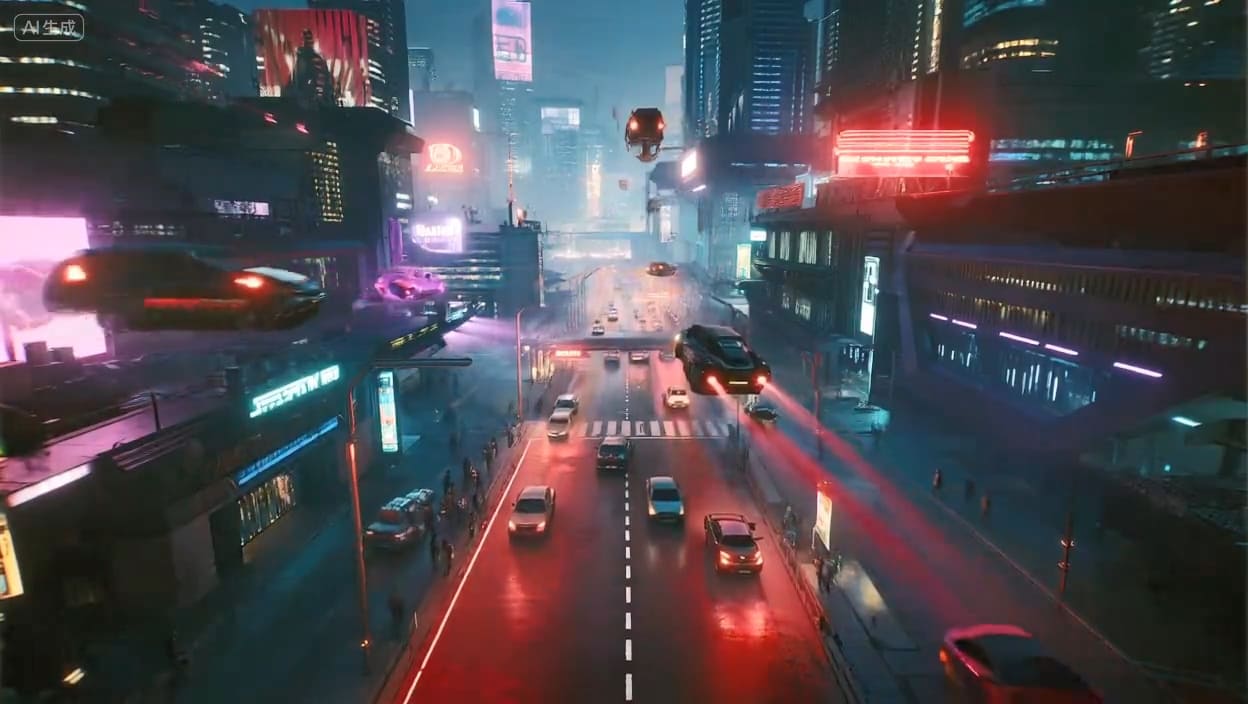
The Product: A fictional "Digital Nomad Planning Template" (a simple productivity tool). The Visuals: Both videos used the exact same AI-generated footage from Story Video AI (cyberpunk cityscapes and coffee shop scenes). The Voiceover: Both used the same AI voice model (a casual, mid-range male voice). The Variable: The Script.
Contender A: "The Human" (Me)
I wrote this script using classic storytelling techniques. I focused on the pain point—the feeling of being overwhelmed. I used sensory language. I tried to build a relationship with the viewer.Time spent writing: 45 minutes.
Contender B: "The Robot" (Story Video AI)
I fed Story Video AI’s Smart Script Analysis tool a simple prompt: "Write a high-converting 30-second TikTok script for a digital nomad planning template. Tone: Energetic and urgent." Time spent generating: 12 seconds.Round 1: The Hook (First 3 Seconds)
The first metric I looked at was the Hook Rate (the percentage of people who stopped scrolling to watch at least 3 seconds).
The Human Script: > "Do you ever wake up in a new city and feel completely lost about where to start your work day? It’s a lonely feeling..."
The AI Script: > "Stop wasting time! Here is the number one secret to doubling your productivity while traveling. You need to see this."
The Winner: The Robot (By a Landslide) AI Hook Rate: 38% Human Hook Rate: 22%
My Analysis: This hurt my pride, but the data doesn't lie. The AI was shameless. It used clickbait tactics ("Number one secret," "Stop wasting time") that I usually consider "cheesy." However, on fast-paced platforms like TikTok and Shorts, cheesy works. My human approach was too slow. I was trying to set a mood; the AI was trying to stop a thumb. The algorithm knows that aggression grabs attention.
Round 2: Retention (Who Stayed to the End?)
Getting them to stop scrolling is one thing; keeping them is another. I looked at the Average Watch Time.
The Human Script: The middle of my script focused on a relatable story about missing a deadline in Bali because of bad Wi-Fi.
The AI Script: The middle of the AI script was a bulleted list of features: "Track your income, find Wi-Fi spots, and manage your visa."
The Winner: The Human Human Retention: 65% watched past 15 seconds. AI Retention: 28% watched past 15 seconds.
My Analysis: Here is where the AI failed. Once it grabbed attention, it didn't know what to do with it. It just listed features. It was dry, robotic, and felt like a generic infomercial. My human script, which established an emotional connection ("the panic of missing a deadline"), kept viewers engaged because they wanted to see how the story ended.
The AI had Breadth (hooks), but the Human had Depth (story).
Round 3: The Conversion (Who Clicked?)
Finally, the metric that pays the bills: Click-Through Rate (CTR) on the "Download Now" link.
Video A (Human): 1.2% CTR Video B (AI): 1.8% CTR
The Winner: The Robot (Technically)
Wait, why did the AI win clicks if people stopped watching halfway through?
Because the AI script put the Call to Action (CTA) right at the beginning and the end. It smashed the viewer with "Link in bio" immediately. My human script waited until the emotional climax at the end to ask for the sale. Since more people saw the start of the video than the end, the AI's brute-force method got more clicks.
The "Hybrid" Workflow: How I Actually Use This Now
So, is the conclusion that we should all fire ourselves and let Story Video AI write everything? No.
The AI video had high clicks, but the quality of leads was lower (high bounce rate on the landing page). The Human video had fewer clicks, but those people actually read the page.
However, I learned that I was ignoring the efficiency of AI hooks. My new workflow, which I’m calling the "Sandwich Method," combines the best of both worlds. I used this for a third test video, and it outperformed both previous attempts.
Step 1: Let the AI Write the Hook
I now use Story Video AI to generate 10 different hooks. I don't try to out-think the machine on the first 3 seconds. It knows what keywords trigger the algorithm. My Choice: I took the AI’s aggressive "Stop wasting time!" opening.Step 2: The Human "Meat"
I delete the AI's generic middle section. This is where I insert my storytelling experience. I replaced the feature list with my personal anecdote about the Bali Wi-Fi disaster.Step 3: The AI Call-to-Action
I let the AI phrase the CTA. Humans tend to be polite ("Please check it out if you want"). AI is direct ("Download it now before the price goes up"). The direct approach converts better.The Verdict
In my final analysis, the Hybrid Video (AI Hook + Human Story + AI CTA) achieved a 2.4% CTR and a 50% Retention Rate.
Story Video AI isn't a replacement for human creativity; it's a relentless optimization tool. It is better than me at grabbing attention, but I am still better at keeping it.
If you are refusing to use AI scripts because they "lack soul," you are likely losing the battle for attention. But if you rely
only on AI scripts, you are losing the battle for connection.My advice? Let the robot kick the door open. Then, you walk in and make the sale.
Have you experimented with mixing AI and human writing? Share your results in the comments below.*